Ketamine is a prescription-only medicine that may be prescribed off-label by our medical team following a comprehensive assessment to assist in the psychotherapy.

THE SCIENCE

The Science of Ketamine:
How It Works in the Brain

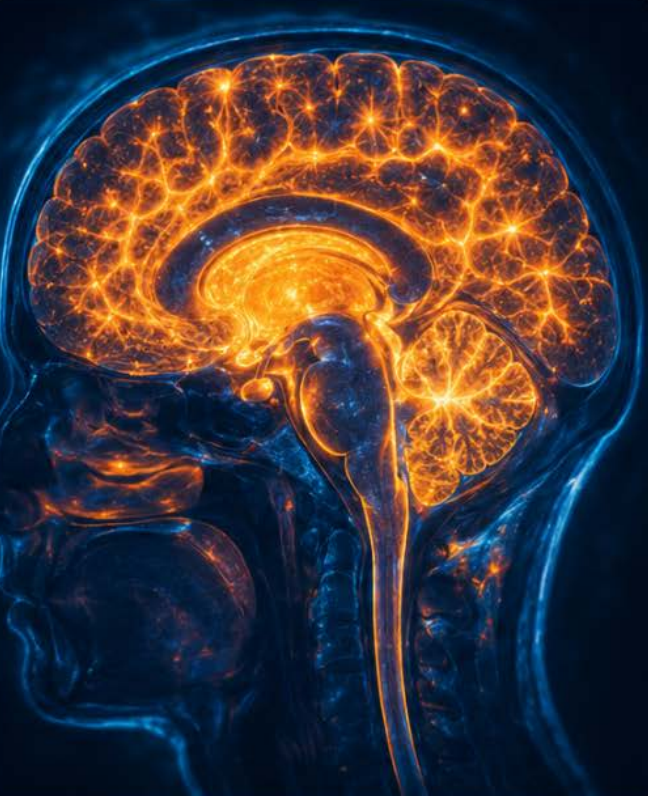
Ketamine works on multiple parts in the brain and body, re-engaging a set of receptor pathways and supporting neuroplasticity. It can help shift patterns that have people stuck in depressive, anxious, trauma and chronic states.

This evidence explains the science in clear terms and, more importantly, what these changes can mean for you.

IMPORTANT INFORMATION

This content is provided for informational and educational purposes about ketamine that may be licensed in your state, an unlabelled use, but certain conditions have a requirement for on-label prescribing. Please discuss with your clinical team to determine whether ketamine might be an effective option for you and to understand the most full-scope, up-to-date medical and psychiatric oversight necessary.

1

NMDA Receptors, GABA and Glutamate

Ketamine is believed (and FDA-unlabeled) to modulate — or enhance — key brain chemistry, primarily NMDA (N-methyl-D-aspartate) receptors, GABA (inhibitory) and glutamate (excitatory) signaling in the brain.

WHAT THIS MAY MEAN FOR YOU

This shifts brain communication and neural balance and can reduce the mental ‘noise’ of overthinking, rumination, and negative thought loops that reinforce mood, anxiety, and emotional distress. It may open up a short window where the brain is less ‘stuck’, more calm, and possibly ready to reset.

KEY POINTS

2

The AMPA System, BDNF and Neuroplasticity

Ketamine activates AMPA receptors and triggers a cascade of neuroplastic signaling. This increases BDNF and supports synaptogenesis.

This can restore the brain’s ability to adapt, rewire, and form connections — also between brain cells.

WHAT THIS MAY MEAN FOR YOU

Old patterns of fear, hopelessness, and self-criticism begin to fade as the brain becomes more responsive. Old emotional pain loosens. This is the transition to a ‘window of neuroplasticity’ where real transformation can become easier.

KEY POINTS

“Ketamine’s significance is not simply that it acts quickly, but that it appears to open a temporary state in which brain, mind and experience may become more receptive to change.”

— The Emerge Clinic

3

Brain Regions and Networks Where Change Occurs

Ketamine influences several brain regions and networks involved in mood, emotion, salience, self-perception and cognition.

These changes are not uniform; they are network-specific as well as level-specific.

WHAT THIS MAY MEAN FOR YOU

Reductions in amygdala threat reactivity can feel less anxious. Increased prefrontal control can improve decision-making. Changes in default mode can reduce self-critical loops.

KEY POINTS

Prefrontal Cortex

Clearer thinking, insight and cognitive control.

Amygdala

Reduced fear reactivity and hypervigilance.

Hippocampus

Improved context for memory and emotional regulation.

Anterior Cingulate Cortex

Better error detection, motivation and emotional regulation.

Default Mode Network

Reduced self-referential thinking and rumination.

4

Monoamines, Reward and Emotional Salience

Dopamine, serotonin and opioidergic systems are modulated. Dopamine may influence reward motivation, drive and an ability to experience pleasure.

This can help re-engage interest in experience and re-make motivations in life more meaningful.

WHAT THIS MAY MEAN FOR YOU

It may help where mood is low or nothing feels rewarding. Motivation is restored and enjoyment can return over time — often not immediately but gradually.

KEY POINTS

5

Stress, Inflammation and the Neuroimmune System

Reducing inflammation can lower the sense of being physically and emotionally overwhelmed and help ‘reset’ the neuroimmune balance and restore stability.

WHAT THIS MAY MEAN FOR YOU

Chronic stress can leave behind inflammatory signaling, which may interfere with neuroplasticity, mood regulation and overall immune response regulating the brain-body system.

KEY POINTS

6

The Psychotherapy Window: Why Context Matters

Ketamine opens a window of increased neuroplasticity and insight. Psychotherapy, intention setting and meaning-making help build what lasts.

How the window is used — and the provider and their context — can shape how durable outcomes are.

WHAT THIS MAY MEAN FOR YOU

Optimal experiences may feel more understood, more hopeful and more connected. The window may let psychotherapy, growth practices and life changes become more effective.

KEY POINTS

FROM RECEPTOR TO PSYCHOLOGICAL CHANGE: A CONCEPTUAL PATHWAY

Short-Medication

Ketamine treatment with clinical oversight

Neurochemistry Modulation

Shifts in brain signaling

Neuroplasticity

Neuronal growth and network renewal

Functional Change

In mood, stress resilience and mental clarity

Therapeutic Opportunity

Psychotherapy and lifestyle changes help with healing

This is a conceptual model. Different people may respond to changes differently and outcomes vary.

“When the brain becomes more flexible, psychotherapy can reach deeper. Change is not forced — it’s allowed.”

— The Emerge Clinic

THE BOTTOM LINE

Ketamine works on many fronts — influences on multiple biological systems to shift and support the brain’s ability to adapt, heal and regulate itself.

The most meaningful and lasting change may come when ketamine is paired with psychotherapy, personal insight and change.

FURTHER READING
IN THIS SERIES

The Research

What the evidence tells us

The Journey

Ketamine’s journey from anaesthesia to psychiatry

Personalised Ketamine Science

What may respond, how we tailor it

Psychology & Personal Insight

Working together in medication

Risk & Safety

Safe, ethical care and continuity

Ketamine use and all psychiatric therapy is not a replacement for treatment. Advice here is to enhance options, align with your care team and help you understand the science behind why ketamine may help, how it works and what supports long-term mental wellness.