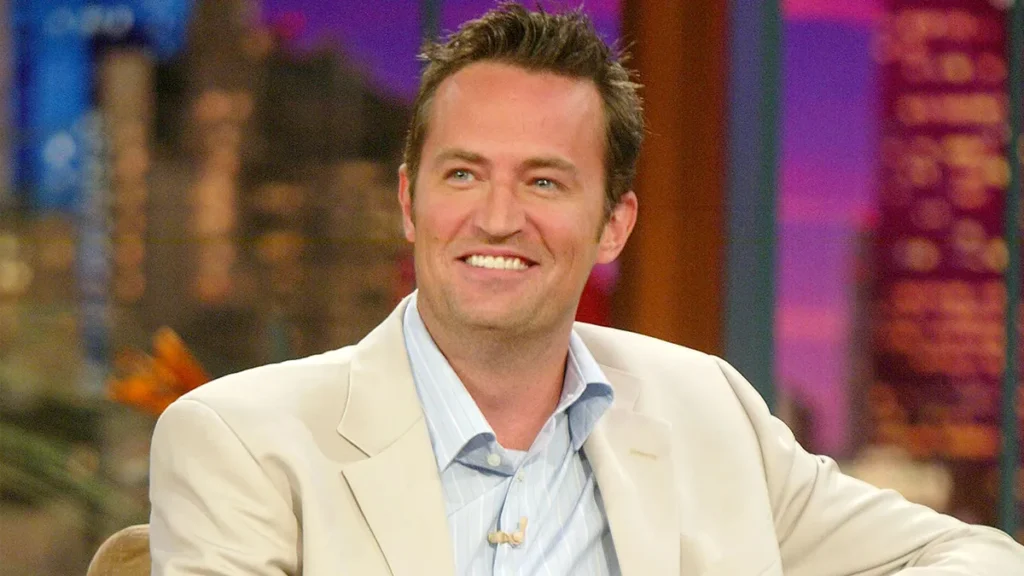
The death of Matthew Perry in October 2023 was a profound loss. He was a beloved actor who had spoken with remarkable honesty about his struggle with addiction, and who had spent decades, and by his own account around $55 million, searching for lasting recovery. His passing prompted grief, reflection, and almost immediately a narrative that has continued to distort public understanding of a medicine with genuine therapeutic value.
Ketamine was named. The connection was drawn. The story became, in much of the press, a story about the dangers of ketamine. That framing is not only inaccurate. It is actively harmful to the growing number of people for whom ketamine-assisted psychotherapy represents a legitimate and carefully managed treatment option.
The evidence warrants a more careful reading.
What the Medical Examiner Actually Found
Matthew Perry was found unresponsive in the hot tub at his Los Angeles home. The Los Angeles County Medical Examiner recorded the acute effects of ketamine as the primary cause of death, with drowning, coronary artery disease and the effects of buprenorphine listed as contributing factors. His death was ruled accidental.
It would therefore be inaccurate to say that ketamine played no part in his death. Ketamine was central to what happened. What is equally important, however, is the context in which it was taken.
The ketamine found in Perry’s system could not have come from his last medically supervised infusion, which had taken place around a week and a half earlier. The blood concentration recorded after his death was within the range associated with general anaesthesia rather than the lower doses generally used in mental-health treatment.
Perry had received ketamine outside a properly controlled therapeutic setting and was alone in water when he lost consciousness. There was no clinician present to monitor his breathing, blood pressure, level of consciousness or response to the drug, and nobody was in a position to intervene when the situation became dangerous.
Buprenorphine was also present in his system. This is a medicine commonly used in the treatment of opioid dependence and can contribute to sedation and respiratory effects. Perry’s underlying coronary artery disease was another contributing factor identified by the medical examiner.
The findings therefore describe a combination of acute ketamine effects, loss of consciousness, drowning and existing medical risks. This was not a death during properly assessed, professionally administered and continuously monitored ketamine-assisted psychotherapy. It followed unsupervised, high-dose use in an exceptionally unsafe environment.
The Dose Was Not a Therapeutic Dose
The ketamine found in Perry’s toxicology was at a level consistent with general anaesthesia. For context, the doses used in ketamine-assisted psychotherapy are carefully calibrated, typically in the range of 0.5 to 0.75 milligrams per kilogram of body weight. The levels in Perry’s system were reported to be more than ten times a standard therapeutic dose. That is not a variation in degree. It is a categorically different clinical situation.
At therapeutic doses, a client receiving ketamine-assisted psychotherapy remains in a dissociative but accessible state. They are not unconscious. They can communicate. A trained clinician is present throughout the entire session. The client is monitored, supported, and cared for in a controlled environment from which they do not leave until it is clinically appropriate to do so.
Anaesthetic doses produce unconsciousness. They require the same level of oversight as surgical anaesthesia. There was no clinical rationale for administering a dose of that magnitude in the context of addiction treatment, and there was certainly no justification for leaving someone under its influence without any supervision at all.
A Network of Exploitation
The criminal investigation that followed Perry’s death revealed something that received considerably less attention than the word “ketamine” in the original headlines: he was exploited.
In 2024, five individuals were arrested in connection with his death. Among them was Dr Maurice L. Morris, the physician responsible for Perry’s care. Dr Morris was accused of providing Perry with access to large quantities of ketamine and permitting his assistant, who had no appropriate medical training, to administer the drug without any proper supervision. Other individuals arrested were implicated in the illegal supply of ketamine and other medications to Perry, operating entirely outside any legitimate clinical structure.
These were not clinicians who made an error of judgement in an otherwise ethical practice. The investigation points to a pattern of deliberate exploitation. Perry paid enormous sums, reportedly far exceeding any legitimate clinical cost, for a substance worth a fraction of what he was charged and administered in conditions no responsible practitioner would permit. He was a wealthy and vulnerable man in active pursuit of recovery, and the people responsible for his care appear to have prioritised their financial gain over his safety and wellbeing.
His death was not the result of ketamine. It was the result of what happens when trust is catastrophically abused.
What Responsible Ketamine-Assisted Psychotherapy Actually Looks Like
The practice of ketamine-assisted psychotherapy, within a properly structured clinical framework, looks nothing like what has been described in this case.
A prescribing clinician conducts a thorough medical assessment before any medicine is considered. The client’s cardiovascular health, mental health history, current medications, and suitability for treatment are all reviewed carefully. Doses are conservative, evidence-based, and individually calibrated. Administration takes place in a clinical setting, with a trained professional present throughout the entire experience. The client does not leave until they are fully oriented and it is safe to do so.
Crucially, the ketamine session exists within a wider psychotherapeutic relationship. Preparation before the session, the experience itself, and integration of what arises are all part of the treatment. The medicine is not the therapy. It is a tool that, when used with clinical skill and genuine care, can create conditions for meaningful therapeutic work. Without that clinical and relational container, what is happening is not ketamine-assisted psychotherapy. It is simply a drug being given to someone without appropriate support, assessment, or oversight.
Perry’s case illustrates, starkly, what it looks like when those safeguards are entirely absent.
What This Case Should Actually Prompt
The appropriate conclusion to draw from Matthew Perry’s death is not that ketamine is dangerous. Ketamine, used within a proper clinical framework, has a well-established safety profile and a growing evidence base as a treatment for depression, PTSD, and conditions closely linked to addiction and trauma.
The appropriate conclusion is that the standards governing its use must be held rigorously, and that vulnerable people deserve protection from those who would exploit their desperation for financial gain.
Perry was let down by the people who were supposed to care for him. He deserved proper assessment, proper dosing, proper supervision, and genuine therapeutic support. He received none of those things. His death is a failure of professional ethics and a failure of duty of care, not a failure of the medicine itself.
The public conversation his passing prompted is understandable. Grief searches for explanations, and ketamine was present in the toxicology report. The more difficult truth, that a group of individuals exploited a man’s suffering for financial gain and left him alone in dangerous circumstances, is harder to reduce to a headline. It is, however, the truth that deserves to be told.
Matthew Perry spent his life trying to get better. He deserved clinicians who were genuinely trying to help him do that.

WRITTEN BY
Paul Gibson
Psychotherapist and Director of Psychotherapeutic Services at The Emerge Clinic. Paul has more than 15 years’ experience supporting people through depression, anxiety, trauma, and addiction, with a particular interest in ketamine-assisted psychotherapy and psychological integration.
- Medically reviewed by Dr Devany
- August 3, 2026