Ketamine is a prescription-only medicine that may be prescribed off-label by our medical team following a comprehensive assessment to assist in the psychotherapy.
SPECIALIST SUPPORT FOR COMPLEX PTSD
Complex PTSD often develops following prolonged or repeated experiences that overwhelm a person’s ability to feel safe, understood or protected. Unlike PTSD, it can affect not only how we respond to threat, but how we relate to ourselves, other people and the world around us.
You may struggle with shame, people pleasing, emotional overwhelm, difficulty trusting others or a persistent feeling that something is fundamentally wrong with you.
These experiences are not character flaws. They are often adaptations developed over many years in order to survive.
Attachment-informed
psychotherapy
Deep, relational support that understands the roots of complex trauma.
Consultant-led
medical
oversight
Safety, thorough assessment and evidence-led care.
Structured preparation
and integration
A proven process to help you feel supported every step of the way.
You are not alone in this.

RECOGNISING COMPLEX PTSD
Complex PTSD often develops over years rather than moments. Many people struggle to identify a single event because their experiences were woven into everyday life — relationships, childhood, family dynamics or environments that never felt consistently safe.
Over time, survival can become a way of being. You may find yourself constantly adapting to others, struggling to understand your emotions, or carrying a persistent feeling that you are somehow different, difficult or fundamentally flawed.
These experiences are more common than many people realise — and they make sense in the context of complex trauma.
YOU MAY RECOGNISE SOME OF THE FOLLOWING
“You were not born believing you were too much, not enough, or difficult to love. Those beliefs had to come from somewhere.”
WHY THIS HAPPENS
Complex PTSD often develops following prolonged or repeated experiences that occur over months or years rather than a single event. These experiences can include emotional neglect, criticism, inconsistent caregiving, abuse, family dysfunction or environments where safety and connection were unpredictable.
During childhood and adolescence, our brains and nervous systems develop in relationship with other people. When those relationships feel unsafe, confusing or inconsistent, we adapt. Those adaptations are often intelligent and necessary — but they can remain long after the original environment has changed.
People pleasing, hyper-independence, emotional overwhelm and chronic shame are not personality flaws. They are often the legacy of a nervous system that learned, very early in life, that safety could not always be assumed.
People Pleasing
Staying connected by prioritizing the needs of others.
Hyper-Independence
Learning that relying on yourself feels safer than relying on other people.
Emotional Numbing
Creating distance from experiences that once felt overwhelming.
Chronic Shame
Carrying beliefs about yourself that were never yours to begin with.
Children will always choose belonging over authenticity if they believe their safety depends on it.
THE SCIENCE OF COMPLEX TRAUMA
Modern neuroscience increasingly supports what many people with Complex PTSD have known for years: prolonged trauma influences emotional regulation, attachment, self-belief and the way the nervous system learns to respond to the world.
The encouraging news is that the brain remains capable of change throughout life. Neuroplasticity, psychotherapy and meaningful relationships all appear to play an important role in recovery.
ATTACHMENT
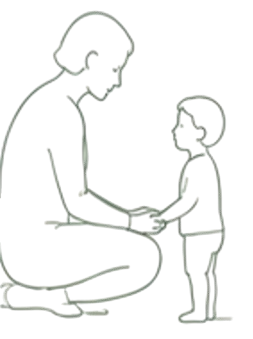
Co-regulation, emotional attunement and internal working models. Children do not learn who they are in isolation. They learn who they are through the eyes of the people around them.
NERVOUS SYSTEM
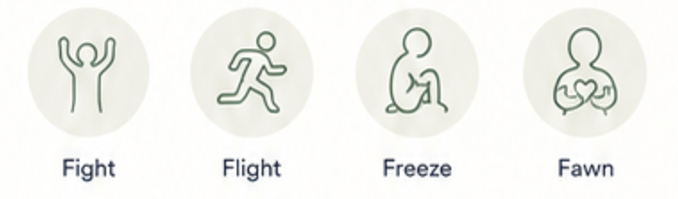
Fight, flight, freeze, fawn. When safety is inconsistent or unpredictable, the nervous system learns to prioritise survival. For many people with Complex PTSD, survival became a way of life rather than a temporary response.
DEFAULT MODE NETWORK
The default mode network is involved in self-referential thinking and the creation of our sense of identity. Complex trauma often shapes deep-seated beliefs about ourselves — affecting not only how we feel, but who we believe ourselves to be.

NEUROPLASTICITY
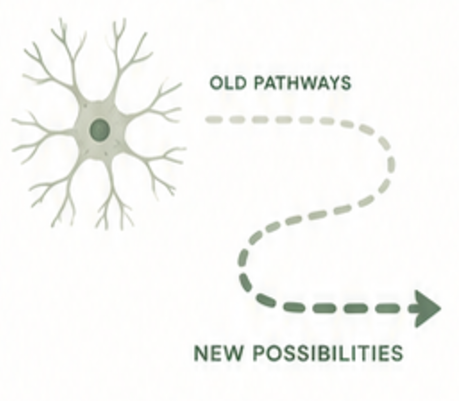
Ketamine appears to temporarily increase neuroplasticity, creating a period in which long-standing patterns may become more accessible to therapeutic work.
NEW POSSIBILITIES
Ketamine may temporarily increase flexibility within the brain. Psychotherapy and integration help translate that opportunity into meaningful and lasting change.
Early Attachment Experiences
Survival Adaptations
Self Beliefs
Neuroplasticity & Flexibility
Therapy
Integration
Connection
The person beneath the adaptations was never lost. They were simply waiting for enough safety to emerge.
HOW KETAMINE-ASSISTED PSYCHOTHERAPY MAY HELP
Complex PTSD is rarely held in one memory or one event. Its effects may be woven through identity, relationships, emotional responses and deeply established beliefs about what is needed to remain safe or accepted.
Ketamine-assisted psychotherapy may create a temporary period of greater openness and psychological flexibility. Within a carefully prepared therapeutic setting, this can make it possible to observe old patterns with more distance, approach difficult emotions with support and begin exploring who you are beyond the roles and adaptations that once protected you.
The intention is not to dismantle protective parts or force traumatic material to the surface. It is to create enough safety for those adaptations to soften when they are no longer needed.


The behaviours you dislike may once have served an important purpose.
Change becomes more possible when the adaptation is understood rather than attacked.

Complex trauma often developed through relationships. Healing frequently requires a different relational experience.
The therapeutic relationship becomes part of the treatment, not merely the setting in which treatment occurs.

Integration helps turn insight into a life that feels more authentically yours.
Recovery is not the removal of every adaptation. It is gaining the freedom to choose when you still need one.
Ketamine may temporarily loosen the certainty of old beliefs. Psychotherapy helps you explore whether those beliefs still belong in the life you are living now.
Complex trauma requires careful pacing.
Ketamine-assisted psychotherapy is not automatically appropriate simply because someone identifies with Complex PTSD. Some people are ready to explore deeper material; others first need support with emotional regulation, stability, relationships, substance use or immediate safety.
Assessment helps determine whether KAP is appropriate now, whether additional preparation is required or whether another therapeutic approach would better serve you.
IMPORTANT CONTEXT
Research has examined ketamine in PTSD and ketamine combined with psychotherapy, with promising but mixed findings. Evidence specifically focused on Complex PTSD remains limited. The rationale for KAP in CPTSD draws partly from trauma research, neuroplasticity, attachment-informed psychotherapy and the broader PTSD/KAP literature, so it should be presented as a carefully assessed specialist approach rather than an established treatment for CPTSD.
Complex trauma may have shaped who you needed to become.
It does not have to decide who you remain.
WHAT HAPPENS NEXT?
Complex trauma often develops over many years. Recovery tends to follow a similar principle — not in terms of duration, but in terms of care, consistency and safety.
If this page resonates with you, the next step is simply a conversation. Together, we can explore whether ketamine-assisted psychotherapy feels appropriate, whether additional preparation would be helpful, or whether another therapeutic approach would better serve you at this stage.
An opportunity to discuss your history, current experiences and any questions you may have.
Psychological and medical assessments help determine whether ketamine-assisted psychotherapy is appropriate and safe for you.
If appropriate, treatment begins with careful preparation, helping you feel informed, supported and ready for the work ahead.
Integration sessions help transform insight into meaningful changes in relationships, identity and everyday life.
Recovery does not ask you to become someone else. It asks whether you might finally feel safe enough to become yourself.
TRUST & EVIDENCE
Complex PTSD is now recognised within ICD-11 as a condition distinct from PTSD. Alongside the core features of PTSD, it includes persistent difficulties with emotional regulation, negative self-concept and relationships — described collectively as disturbances in self-organisation.
Research into CPTSD has advanced considerably, but direct clinical trials of ketamine-assisted psychotherapy for CPTSD remain limited. Our approach therefore draws carefully from three related areas of evidence: research validating CPTSD as a distinct condition, research into effective psychotherapy for complex trauma, and the emerging evidence for ketamine and ketamine-assisted psychotherapy in chronic PTSD.
These areas inform clinical thinking. They do not allow us to claim that KAP is an established treatment for CPTSD.

ICD-11 distinguishes CPTSD from PTSD. Both involve re-experiencing, avoidance and a persistent sense of threat. CPTSD also includes enduring difficulties with emotional regulation, self-concept and relationships. Large studies have contrasted PTSD and CPTSD profiles, supporting the view that CPTSD is not merely ‘more severe PTSD.’ A contemporary memory-and-identity model proposes that intrusive traumatic memories and deeply established negative identities interact to produce its characteristic symptoms.
Reviews of treatment for complex trauma suggest that trauma-focused therapies can improve CPTSD symptoms. Multicomponent and flexible approaches may also be valuable where emotional regulation, interpersonal difficulties and instability require additional attention. The evidence does not support one rigid sequence for every person — some benefit from preparation and stabilisation before deeper trauma work, others may safely begin trauma-focused therapy earlier. Treatment should be paced according to the individual rather than a diagnostic formula.
Randomised trials have reported rapid reductions in symptoms among some people with chronic PTSD following ketamine treatment. Real-world KAP studies have also reported sustained improvements in PTSD, depression and anxiety, while preliminary studies combining ketamine with structured psychotherapy continue to develop. These findings provide a scientific rationale for investigating KAP in complex trauma. They do not prove that the same outcomes apply specifically to CPTSD.
FEATURED STUDY
Randomised study in adults with PTSD and ICD-11 CPTSD following childhood abuse compared STAIR Narrative Therapy, prolonged exposure and STAIR alone. All approaches produced relevant improvements, but the predicted superiority of the phase-based programme was not supported. This highlights the need for flexible, individualised treatment.
Hyland, P. Shevlin, M, Fyvie, C. et al. (2023) Psychological treatment for PTSO and CPTSD in adults with a history of childhood abuse: a three-arm randomised controlled trial. Front. Psychiatry 14.954671
EVIDENCE AT A GLANCE

Her work has helped establish that treatment may need to address emotional regulation, relationships and trauma symptoms rather than assuming that one method or sequence is appropriate for everyone.
Professor Marylene Cloitre
Clinical researcher in traumatic stress and complex PTSD

His work helps explain why complex trauma can affect not only memory and threat, but the identity a person develops in response to what happened.
Professor Chris Brewin
Professor of Clinical Psychology, University College London
WHAT WE CAN RESPONSIBLY SAY
The evidence supports CPTSD as a distinct and clinically meaningful condition. Psychological treatments can improve its symptoms, and treatment should account for emotional regulation, identity, relationships and individual readiness.
Ketamine has shown promise in chronic PTSD, and KAP research is developing. However, direct evidence for KAP specifically in CPTSD is not yet established. At The Emerge Clinic, this uncertainty is addressed through careful assessment, preparation, therapeutic support and honest discussion of alternative options.
HOW THIS EVIDENCE SHAPES OUR APPROACH
The absence of a simple answer does not mean there is no path forward. It means the path must be individual, careful and honest.
WHEN YOU’RE READY
Reaching out does not commit you to treatment. It simply creates an opportunity to have an honest conversation about what you’ve been living with and whether we may be able to help.
If ketamine-assisted psychotherapy is not appropriate, we’ll tell you. If another approach feels more suitable, we’ll tell you that too.
The goal is not to convince you. It is to help you make an informed decision about what happens next.
Your enquiry comes directly to Paul. You’ll be speaking with the clinician throughout.
No obligation or pressure. Ask questions, share as much or as little as you feel comfortable.
Most enquiries receive a response within one working day.
Complete the form below and we will be in touch to arrange an initial conversation.
Recovery is not about becoming someone else. It is about becoming more fully yourself.
Ketamine-assisted psychotherapy can support a range of conditions. Learn more about how we work with each individual.